
What is the Difference Between 3PL and 4PL Logistics
Posted On January 16, 2026As businesses grow and orders increase, delivery teams start exploring new shipping models. Something that can fulfil rapidly scaling demands. They reach a point where in-house shipping no longer works for their scaling logistics operations.
This is where 3PL and 4PL logistics come in. These are logistic models that offer different roles, levels of control, and structure in the supply chains.
This guide touches upon all the main differences between 3PL and 4PL in-depth. We’ll go over how they work and how they affect cost, control, and visibility. In addition, we’ll compare 3PL vs 4PL to help you grasp their logistics ecosystem in depth.
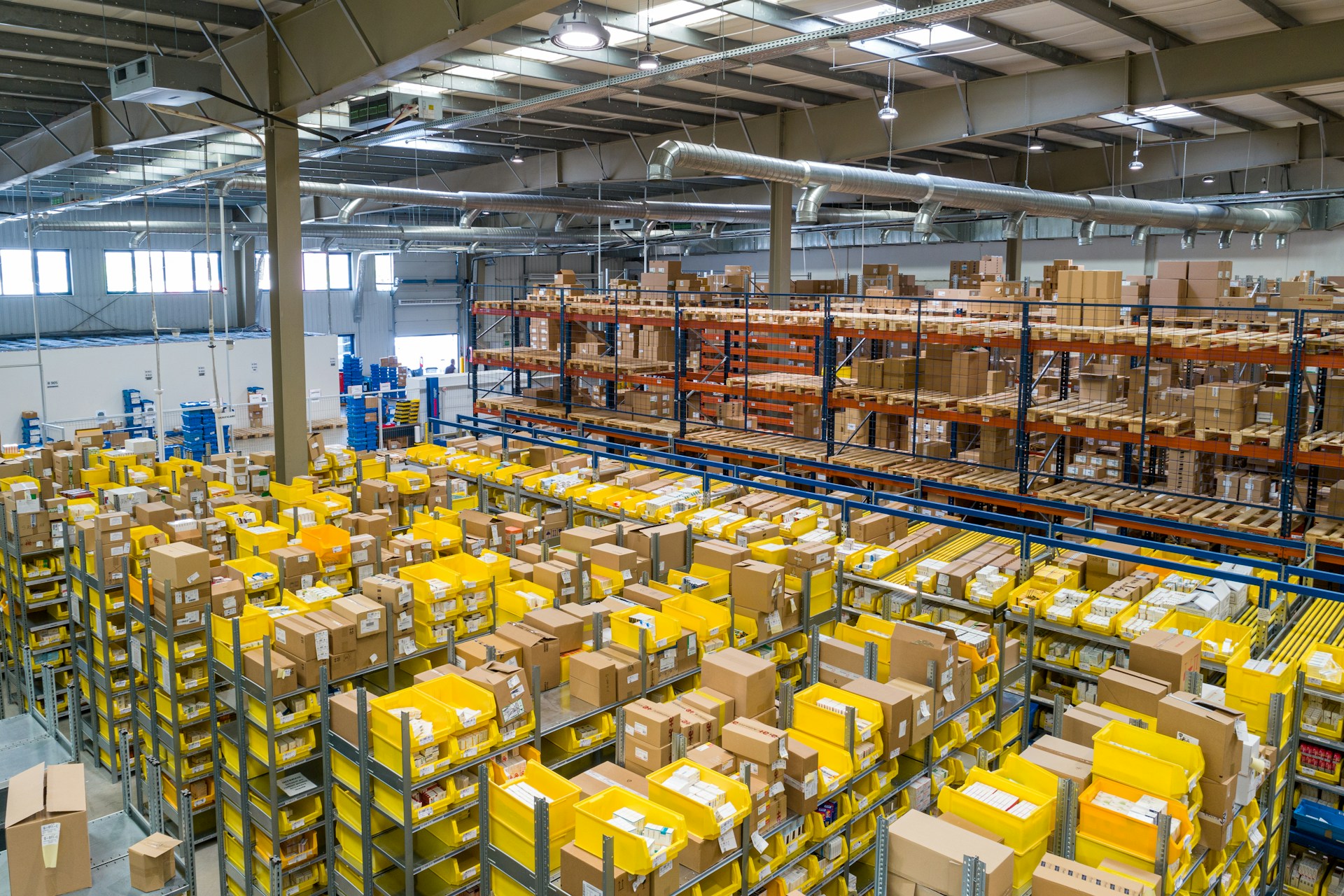
3rd Party Logistics Definition
3PL or 3rd party logistics definition means outsourcing shipping through an external provider. It is quite normal for companies to be overwhelmed by production. This can limit their capability for handling, packaging, and shipping. This is where 3PL shines.
So, 3PL meaning in logistics, simply refers to an external company that manages everything in the shipping process. People often call it the “3rd party logistics 3PL” model, allowing businesses to focus on the importance they have, not the shipping process.
Note: The 3PL provider is like an extension of the firm. Typical 3PL services cover everything from handling and packaging to order fulfillment and services, including labeling.
Real-World 3PL Logistics Examples
The best way to understand how this works is via examples. So, here are a few real-world 3PL logistics examples, each of which encompasses daily operations:
eCommerce Fulfillment
An online store has to send its inventory to a fulfillment warehouse. Instead of the store wasting time on shipping logistics, the 3PL provider handles it. In the meantime, the seller focused on its business concerns like marketing and support.
Retail Distribution Support
A supplier produces a physical product that needs to be moved across stores in several regions. Instead of organizing the shipping themselves, the company hires a 3PL firm, which handles the shipping. This improves their delivery speed.
Consolidation/Deconsolidation
A business sells convenience store goods, but each store orders a different set of items. The 3PL company handles the consolidation, palletization, and shipping, improving efficiency. This keeps the firm’s operation intact, even during peak weeks.
3PL Pros and Cons
Now that we know the 3PL meaning, let’s take a deeper look into this logistics service to bring out the advantages and disadvantages.
Pros: | Cons: |
No need to waste time or invest in teams for transport and warehousing. | The monthly storage and handling fees start to add up over time. |
You can count on fast and efficient inventory management. | There is limited control over peak-season performance. |
The provider handles everything from the warehouse to the delivery point. | You still need to manage carriers and other vendors. |
It’s very easy to scale order volume with 3PL handling logistics. | The service quality may differ based on the specific location. |
That’s it about third-party providers. So, what is fourth-party logistics (4PL)?
What Does 4PL Mean
To understand what does 4PL mean, let’s start with the role. A 4PL does not move boxes nor run anything in or out of the warehouse. A 4PL firm designs and controls the system behind the logistics. This model is known as a fourth-party logistics and acts like an architect for the setup.
So, the 4PL logistics definition translates into connecting systems, establishing workflows, and measuring performance. 4PL is the key that manages the entire supply. Think of the planning, coordination, data tracking, risk control, and more…
In short, through advanced technology, a 4PL firm becomes the single point of contact for all the logistics operations of a certain company.
Real-World 4PL Logistics Examples
To understand the PL logistics meaning better, let’s go over some practical 4PL examples:
eCommerce Expansion
An eCommerce store wants to expand into multiple countries. The 4PL firm connects them to all partners, designs the workflow, and standardizes the process. The brand expands seamlessly without having to go through each step of the process directly.
Network Coordination
A factory manufactures parts for many suppliers across the country (even if beyond borders). A 4PL company handles everything from schedules, delays, and transportation. Hence, logistics do not bottleneck the manufacturing process and even enhance it.
Seasonal Order Waves
Whenever a company faces seasonal spikes in orders, some changes are necessary. The 4PL company can quickly switch freight shipping carriers, especially when volumes rise. This protects a company’s reputation and fulfills all the orders without unwanted delays.
If we have to list all examples, it would take days. However, the point of 4PL is clear – a set of additional hands, helping the company with complex logistics.
4PL Pros and Cons
We now know exactly what is 3PL and 4PL in logistics. However, while 4PL comes with many advantages, there are surely a few limitations.
Let’s go over the most noticeable fourth-party logistics advantages and disadvantages:
Pros: | Cons: |
You get complete coordination of all logistics partners. | 4PL does not move anything, unlike 3PL that packs and ships. |
There is only one contract instead of many vendor agreements. | There are higher management and technology fees. |
The 4PL services include centralized data and reporting. | The process of onboarding takes longer when comparing 4PL vs 3PL logistics. |
You get a custom process design for maximum efficiency. | It’s harder to switch to a provider later that will continue the legacy process. |
Note: Most 4PL relations last for years!
Key Differences Between 3PL and 4PL Logistics
A lot of teams compare 3PL and 4PL when their volume starts to rise. To understand the 3PL and 4PL logistics differences better, we’ve prepared a detailed comparison. We have touched upon everything from roles and management to daily focus, technology, and of course, control.
Area: | 3PL: | 4PL: |
Contract Structure | Short to mid-term service contracts. | Often built for long-term partnerships with companies. |
Cost Model | Pay for storage, labor, and shipments. | Pay for management, systems, and optimization. |
Scalability | Scales by adding warehouses or carriers. | Scales by redesigning the logistics network. |
Process Ownership | 3PL typically follows your workflows. | Redesigns the full logistics process from top to bottom. |
Decision Authority | 3PL is vastly limited to its facility. | Allowed to make network-wide decisions. |
Risk Handling | Handles warehouse and shipping risks. | Handles vendor, performance, and disruption risks. |
Customization | 3PL firms may suggest solutions. | Offers full logistics model customization. |
Internal Team Impact | You still manage multiple partners. | Reduces internal logistics management workload. |
These are the primary differences between 3PL vs 4PL. As we can see, each model focuses on solving a distinct set of problems. While 3PL handles the execution, 4PL focuses solely on the design behind the logistics operations.
The choice between 3PL and 4PL logistics heavily depends on what your business requires. If your logistics require structuring, 4PL can design them for you. In turn, if you’re lacking some heavy-lifting, a 3PL firm provides it.
1PL, 2PL, 3PL, 4PL, 5PL - What Does It All Mean?
Speaking of the most popular logistics models, you have probably heard about 1PL, 2PL, 3PL, 4PL, and even 5PL. To put this simply, we can look at them as “levels”. Each level shifts more and more responsibility away from your company.
Here’s a brief breakdown of each:
- 1PL: You store, move, and deliver goods using your own people and assets.
- 2PL: You hire carriers to transport goods while you manage everything else.
- 3PL: A third-party provider runs everything with warehousing and shipping.
- 4PL: A coordinator manages all your logistics partners under one system.
- 5PL: A network-level model focused on automation and large-scale planning.
So, the higher the level (e.g, 1PL vs 2PL vs 3PL vs 4PL vs 5PL), the more responsibility is being taken away from the company and outsourced.
However, 3PL, 4PL, and 5PL remain the most frequently adopted models, while 3PL and 4PL can work together to design and execute ideal logistics.
So, What Should You Choose for Your Business?
3PL vs 4PL logistics – which works best for you?
The answer is, what level of responsibility would you like to shift away? If you only need support with moving boxes, storing, consolidation/deconsolidation, then 3PL is the answer. If you have the team for heavy-lifting but you’re lacking relations, coodination and connectins 4PL is for you.
Either way, your choice shapes how much control you keep, how complex the operations will be, and how fast your business scales. Best of luck!
