
How Much Does a Pallet Weigh and How Much Weight Can It Hold?
Posted On 11th March 2025Updated June, 2026
An accurate understanding of standard pallet weight and load capacity is critical to calculating total cargo tare weight, optimizing warehouse racking safety, and preventing expensive carrier adjustment fees.
When booking Less-Than-Truckload (LTL) shipments, the total weight of your shipping platform must be included in your bill of lading to avoid retroactive terminal corrections. If you are staging cargo right now, you can determine total lane expenditures instantly by pairing your platform specs with our live LTL Freight Quote Calculator.
The Quick Answer: A standard North American 48" × 40" GMA wood pallet weighs between 33 and 48 pounds (15 to 22 kg) empty, depending on the type of lumber and its moisture levels. It can safely support a dynamic load capacity of 2,500 pounds, and a static, stationary load capacity of up to 4,600 pounds.
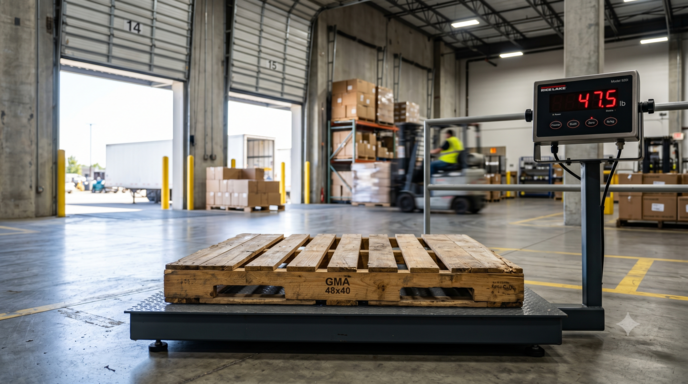
Master Pallet Weight & Capacity Chart
This quick reference guide breaks down empty pallet weights and safe load limits across the most common industrial configurations handled throughout national supply chains.
| Pallet Type & Material | Standard Dimensions (Inches) | Empty Pallet Weight (Tare) | Safe Dynamic Load | Max Static Load |
|---|---|---|---|---|
| GMA Wood Stringer | 48″ × 40″ | 33 – 48 lbs | 2,500 lbs | 4,600 lbs |
| Heavy-Duty Wood Block | 48″ × 40″ | 55 – 75 lbs | 4,600 lbs | 6,000 lbs |
| Lightweight Plastic (Export) | 48″ × 40″ | 10 – 30 lbs | 1,000 lbs | 1,500 lbs |
| Rackable Plastic | 48″ × 40″ | 40 – 55 lbs | 4,000 lbs | 15,000 lbs |
| Industrial Steel / Metal | 48″ × 40″ | 65 – 150 lbs | 5,500 lbs | 10,000 lbs |
| Square Chemical Wood | 48″ × 48″ | 37 – 50 lbs | 3,000 lbs | 4,700 lbs |
| Compact Beverage Wood | 36″ × 36″ | 30 – 35 lbs | 1,500 lbs | 3,550 lbs |
Pallet Weight Variations by Core Material
The total weight of a pallet depends heavily on its base material composition and structural design. Each format serves a distinct purpose within commercial transportation loops.
Wood Pallets
Wooden platforms remain the dominant choice for domestic freight operations. A standard 48" x 40" stringer pallet made of softwood typically weighs about 35 pounds, while a model made of durable hardwood can weigh closer to 50 pounds.
Heavy-duty block pallets, used extensively in institutional leasing loops like CHEP or PECO, use significantly more timber volume and steel fasteners, raising their empty tare weight to 75 pounds.
Plastic Pallets
Plastic platforms are widely used in automated distribution facilities, food processing plants, and international air freight hubs where moisture control is vital. Lightweight nestable export models can weigh as little as 10 pounds, significantly lowering air freight fuel overhead.
In contrast, solid-deck, heavy-duty, rackable plastic units weigh up to 55 pounds but are reinforced with internal fiberglass or steel rods to support massive structural loads.
Metal Pallets
Constructed from heavy-duty aluminum or carbon steel, metal platforms are exceptionally rare and reserved for specialized heavy manufacturing, aerospace applications, or closed-loop industrial facility operations.
While aluminum variants keep weight relatively low, carbon steel platforms can weigh up to 150 pounds empty, though they offer unmatched durability and fire resistance.
Structural Pallet Styles by Design
The physical framework of a platform affects both its ease of handling and its base weight. Shippers evaluate five primary formats:
- Stringer Pallets: Built with solid parallel wood beams (2x4s) running between the top and bottom deck boards, offering reliable two-way or notched four-way forklift entry.
- Block Pallets: Utilizing solid wood blocks instead of long stringers to support the deck, allowing completely unobstructed four-way forklift entry and offering higher dynamic load thresholds.
- Double Face Pallets: Constructed with structural wooden decks on both the top and bottom faces to distribute cargo mass evenly and allow for stable vertical stacking.
- Double Wing Pallets: Features top and bottom deck boards that extend significantly past the outer stringers, creating an overlapping lip designed for specific cargo strapping configurations.
- Solid Deck Pallets: Built with a continuous, smooth top surface instead of spaced slats, making them ideal for shipping small, loose, or irregularly shaped components.
Why Wood Pallet Weight Changes Over Time
A common technical problem for warehouse managers is that the weight of a standard wood pallet is never completely permanent. Because lumber is naturally porous, it acts like a sponge when exposed to high humidity, precipitation, or damp storage yards.
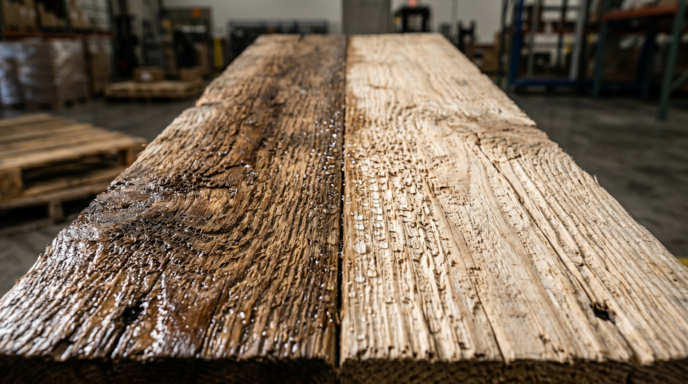
In wet or unconditioned environments, a standard wooden pallet can absorb enough water to increase its base weight by 10 to 20 pounds, turning a 40-pound tare weight into a 60-pound weight. Conversely, as wood ages in dry storage or loses splinters during rugged forklift handling, it gradually drops in material weight.
To maintain exact accuracy during freight profiling, logistics managers often favor plastic platforms or rely on our LTL Tracking Tool to monitor cargo movements smoothly.
Understanding Static vs. Dynamic Load Limits
When auditing how much weight a pallet can hold, shippers must distinguish between static, dynamic, and racking thresholds to prevent complete product collapses:
- Dynamic Capacity (2,500 lbs Standard): The maximum weight a pallet can support when it is being actively lifted, tilted, or transported across a terminal floor by a forklift or pallet jack.
- Static Capacity (4,600 lbs Standard): The maximum weight a platform can hold when resting completely motionless on a flat, solid concrete floor.
- Racking Capacity (2,200 lbs Standard): The maximum weight a pallet can safely bear when placed across open-beam warehouse racking without center floor support.
How Many Pallets Fit in a Shipping Container or Trailer?
Calculating physical trailer volume is only the first stage of freight profiling. To ensure your shipment stays within lawful over-the-road axle weight limits and avoids costly carrier adjustments, you must factor the weight of the platform itself into your gross tare calculations.
Shippers can consult our complete resource on standard pallet sizes with charts to review average weight variances across wood, plastic, and steel materials before formatting their final shipping manifest.
Pallet Weights and Load Capacity FAQs
Does the weight of the empty pallet count toward my total LTL freight rate?
Yes. Carriers bill your lane based on total tare weight, which includes the cargo, packaging materials, shrink wrap, and the physical pallet base. Failing to include the approximate 40-pound weight of your pallet on your shipping manifest can trigger weight adjustments at the regional carrier dock.
How many empty pallets can you legally stack on a flatbed or dry van?
For standard domestic transit, empty wood pallets are typically stacked 15 to 20 units high per column, reaching a height of roughly 7 to 8 feet. This layout matches national trailer door heights and keeps columns secure during backhaul terminal relocations.
How do I find out the exact weight capacity of a custom or non-standard pallet size?
Weight capacities scale directly based on lumber thickness and fastener placement. If your business uses custom-built platforms or non-GMA configurations, you can review regional carriers' equipment boundaries in our directory of the largest trucking companies in the USA.
Streamline Your Pallet Logistics with FreightRun
Managing pallet dimensions, calculating total tare configurations, and preventing unexpected carrier re-weigh surcharges requires strict operational oversight. At FreightRun, we eliminate the guesswork in industrial distribution by integrating real-time weight-profiling tools with North America's leading carrier networks.
Whether you are shipping a single standard GMA unit or coordinating complex multi-pallet industrial drops, our logistics specialists are here to audit your specs and secure your margins. Get a freight quote now.
