
How to Transport a Motorcycle Across the Country Without Riding
Posted On February 26, 2025Updated 6/23/26
If you need to move a bike long-distance, knowing how to transport a motorcycle safely from one state to another without adding mileage to the odometer is essential.
Whether you just purchased a vintage cruiser online, are relocating for a job, or are staging a cross-country tour, selecting the right mode of transport helps preserve your asset's condition and protect your budget.
You should always check public safety ratings and active licensing credentials via the FMCSA Company Snapshot database to ensure the carrier is fully authorized for interstate commerce.
This complete guide analyzes the primary ways to transport a motorcycle, maps expected motorcycle shipping costs, and breaks down the preparation steps needed for a seamless delivery.
If you are also moving accompanying garage machinery or industrial parts, you can evaluate the total trailer space requirements using our interactive linear-feet calculator before booking.
What Is the Best Way to Transport a Motorcycle?
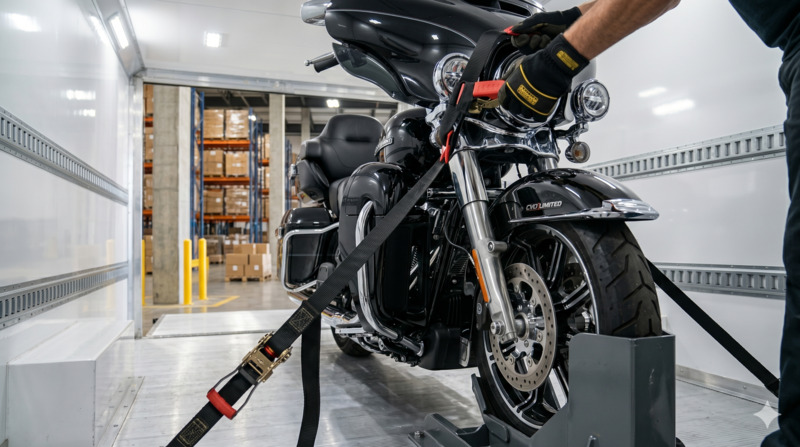
The ideal method for shipping a motorcycle depends entirely on your target budget, transit distance, and risk tolerance. Commercial logistics providers offer three primary transportation frameworks.
1. Specialized Motorcycle Moving Companies
Partnering with dedicated motorcycle moving firms is the most seamless strategy for standard door-to-door transit. These niche providers design their transport trucks specifically for single-track vehicles.
- How it works: Drivers utilize hydraulic lift gates or specialized low-angle loading ramps to prevent low-clearance exhaust systems from scraping.
- The Advantage: Your bike is handled by specialists who understand specific tie-down anchor points for sportbikes, cruisers, and adventure motorcycles alike.
2. Open vs. Enclosed Transport Carriers
When booking through commercial auto transport grids, you must choose between open-air and climate-protected equipment.
- Open Carrier Transportation: This represents the cheapest way to transport a motorcycle. The bike is secured to an open-air multi-car carrier, a flatbed trailer, or a specialized tow-hitch carrier. While economical for short regional distances, it leaves your vehicle entirely exposed to road debris, gravel chips, and severe weather.
- Enclosed Trailer Logistics: For true cross-country distances, shipping inside a hard-sided van or closed freight trailer is highly recommended. Your vehicle remains entirely shielded from the elements. Because of a motorcycle's compact footprint, it can often be bundled securely as an asset-light load inside traditional LTL freight shipping networks to keep costs manageable, while bulk collectors or dealerships moving multiple bikes simultaneously can book dedicated FTL freight shipping pipelines.
3. Commercial Motorcycle Freight Shipping (Crated Fleet Logistics)
If you require maximum structural security or are shipping a motorcycle to Hawaii, Alaska, or Puerto Rico, industrial motorcycle freight shipping is your best option.
This process involves anchoring the bike to a heavy-duty wooden pallet and surrounding it with an enclosed motorcycle shipping crate or specialized transport container. The fully protected container is then loaded onto standard LTL freight trucks, rail lines, or cargo ships.
It is important to comply with legal weight restrictions and safety guidelines for auto transport. You can review current towing regulations and vehicle safety thresholds on the official National Highway Traffic Safety Administration (NHTSA) portal.
Freight Shipping Pros and Cons
- High Structural Security: The protective outer shell guards your bike against external impacts, rain, and shifting adjacent cargo.
- Reliable Tracking Metrics: Commercial freight lines run on rigid terminal schedules, offering precise real-time tracking data.
- Mandatory Pre-Shipment Preparation: Freight networks require strict compliance with hazardous material safety rules. You must drain the fuel tank, disconnect the battery terminals, and remove fluid risks before the carrier accepts the crate.
- Specialized Loading Equipment Needed: Moving a heavy, fully crated motorcycle requires a loading dock, a forklift, or a transport truck equipped with a heavy-duty liftgate at both the pickup and delivery points.
How Much Does It Cost to Ship a Motorcycle Cross Country?
Your final motorcycle shipping quotes fluctuate based on total mileage, vehicle weight, equipment choices, and seasonal market demand. Enclosed transport options best protect your vehicle over long distances but carry a higher premium than open-air options.
The matrix below outlines the average cost profiles for enclosed cross-country transport:
| Total Shipping Distance | Average Price Per Mile | Estimated Transit Time | Example Route Cost (Enclosed) |
|---|---|---|---|
| 0 to 799 Miles | $1.49 / mile | 1 to 3 Days | 600 Miles = $849.00 |
| 800 to 1,499 Miles | $0.89 / mile | 3 to 5 Days | 1,200 Miles = $1,068.00 |
| 1,500 to 2,399 Miles | $0.59 / mile | 4 to 7 Days | 2,000 Miles = $1,180.00 |
| 2,400+ Miles | $0.49 / mile | 5 to 9 Days | 3,000 Miles = $1,470.00 |
Pro Tip: To find the most economical transport window, source your motorcycle transport options during late autumn or winter. Spring and summer mark peak riding seasons, which drive up carrier demand and baseline spot-market pricing across all major corridors.
Calculate Instant Multi-Carrier Motorcycle Shipping Rates Online
Independent Transporters and Hotshot Logistics
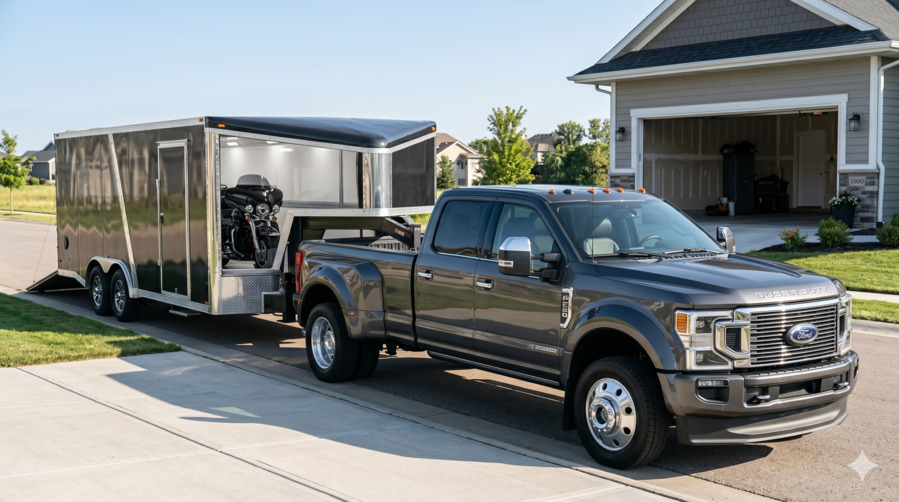
Utilizing independent motorcycle shippers or specialized hotshot transport networks offers a flexible alternative to large logistics conglomerates. Independent operators typically use heavy-duty pickup trucks equipped with enclosed gooseneck trailers to move smaller, dedicated loads.
- Tailored Routing Schedules: Independent operators work outside rigid hub-and-spoke terminals, allowing them to coordinate custom pickup and drop-off windows that match your schedule.
- Direct Driver Communication: You coordinate directly with the driver hauling your bike, bypassing multi-tier customer service queues and automated ticketing systems.
- Hotshot Priority Transport: If you face urgent deadlines, hotshot operators can provide dedicated, non-stop transit directly to your destination without intermediate cross-docking stops.
Step-by-Step DIY Motorcycle Transportation
If you choose to bypass commercial transport providers and manage the haul yourself with a personal truck or a rental utility trailer, proper execution is critical to prevent road accidents or structural damage to the bike.
Step 1: Secure the Right Equipment
Never rely on makeshift materials. You require a heavy-duty loading ramp rated for your bike's wet weight, high-tensile ratchet straps, soft loops to protect your handlebars, and a dedicated metal front wheel chock to prevent the steering column from twisting.
Step 2: Safe Loading Techniques
Position your vehicle or trailer on level ground. Always work with at least two spotters when guiding the bike up the loading ramp. Keep one person on the clutch and brake while the spotters balance the chassis on both sides as it ascends into the trailer bed.
Step 3: Anchor and Compress the Suspension
Secure your soft loops around structurally sound points like the lower triple tree clamp or the frame sub-assembly. Never anchor to vulnerable components like rearview mirrors or turn signals.
Attach your ratchet straps at a 45-degree forward angle, pulling the front tire firmly into the wheel chock. Tighten the straps evenly to slightly compress the front forks. This keeps the tie-downs taut and stops the bike from bouncing or shifting on rough highways.
Essential Preparation Checklist for Motorcycle Shipping
To safeguard your vehicle and ensure compliance with cargo safety standards, complete these pre-transit preparation steps. Before handing your keys over to a carrier, you can review safety histories, operational footprints, and insurance limits across our comprehensive freight carriers list to verify your driver's credentials.
- Thoroughly Clean the Bike: Wash away road grime and dirt. A spotless chassis makes it much easier to spot minor surface imperfections or structural issues during pre-loading checks.
- Document Existing Condition: Take clear, high-resolution photographs of your motorcycle from multiple angles. Capture close-up shots of the fairings, engine casings, and instrument clusters to establish an undeniable visual record before transit.
- Review the Bill of Lading (BOL): When your driver arrives, perform a joint walk-around inspection. Ensure every pre-existing scratch or blemish is explicitly noted on the official BOL before signing off on the shipment.
- Secure Loose Accessories: Remove or securely bolt down aftermarket GPS cradles, modular luggage racks, side saddlebags, and tall touring windshields to prevent wind damage or loss during transit.
- Fluid and Battery Management: Check for active oil or coolant leaks. If you are shipping via standard LTL freight lines, ensure your fuel tank is drawn down below one-quarter capacity and disconnect your battery terminals as required by transit safety rules.
Before loading your motorcycle onto a ramp, consult the official Motorcycle Safety Foundation resources for bike stability tips, steering-neck-locking configurations, and overall single-track vehicle-handling guidelines.
Frequently Asked Questions
What is the single safest way to ship a motorcycle cross-country?
The safest strategy is crating motorcycle freight inside an enclosed transport trailer. Locking your bike into a dedicated, reinforced wooden crate isolates it entirely from shifting adjacent cargo, eliminates fluid hazards, and blocks all exposure to variable outdoor weather elements.
How do you safely determine insurance valuation limits before shipping?
Never rely solely on baseline carrier liability limits, which often compensate based on cargo weight rather than market value. Check your primary motorcycle insurance policy to see if it covers inland marine transit, and verify that your chosen transporter carries a verified, active cargo insurance certificate matching your bike's actual replacement value.
Can I include extra parts or riding gear inside the motorcycle shipping crate?
Most high-volume freight shipping companies prohibit packing loose personal items, heavy riding helmets, or loose unbolted parts inside the transport crate unless they are explicitly listed on your shipping manifest. Loose items can shift during transit, scratching fairings or creating balance hazards inside the trailer.
What specific documentation do I need to hand over to an interstate transporter?
You must provide the carrier with a signed copy of the Bill of Lading, a copy of the vehicle registration, and explicit keys for the ignition, steering lock, and gas cap. If your vehicle is crossing international borders or maritime checkpoints, you must also provide a notarized letter of authorization or a clean title copy for customs review.
Centralize Your Long-Distance Motorcycle Transport with FreightRun
FreightRun streamlines your long-distance transportation logistics by instantly connecting you with the country's leading insured carrier networks.
Use our automated platform to compare transparent, real-time rates, view verified compliance histories, and lock in your specialized transit lanes on a single dashboard.
Run a Live Freight Quote and Match with Top Motorcycle Shippers Today
